What is Volatility?
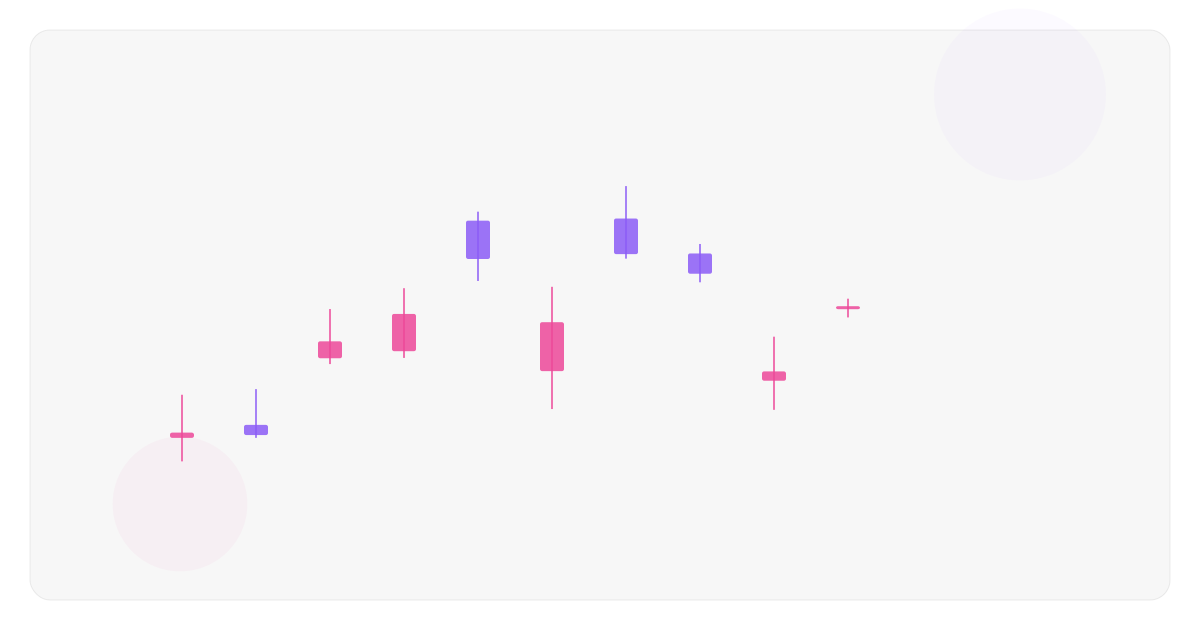
Volatility is the intensity with which the price of an investment rises and falls. A volatile asset can appreciate 5% in one day and fall 3% the next. The higher the volatility, the higher the risk — but also the higher the potential for gain.
Examples of volatility
| Asset | Volatility | Typical daily variation |
|---|---|---|
| Savings | Almost zero | 0% |
| Treasury Selic | Very low | 0.03% |
| Stocks (Ibovespa) | Medium | 1-2% |
| Bitcoin | Very high | 3-10% |
| Meme coins | Extreme | 10-50% |
Is volatility bad?
Not necessarily. It depends on your profile:
- Conservative: volatility is stress. Prefer fixed income.
- Moderate: accepts some oscillation in exchange for higher returns.
- Daring: uses volatility to their advantage (buys on dips).
How to deal with volatility
- Have a long horizon — in the short term, everything oscillates
- Diversify — different assets oscillate at different times
- Don’t check every day — checking prices daily generates anxiety
- Invest regularly — monthly contributions smooth out the average price
- Have an emergency reserve — to avoid having to sell at a low price
Volatility index
In Brazil, the main indicator is the VIX (fear index). When the VIX is high, the market is nervous. When it’s low, it’s calm.