
What it is
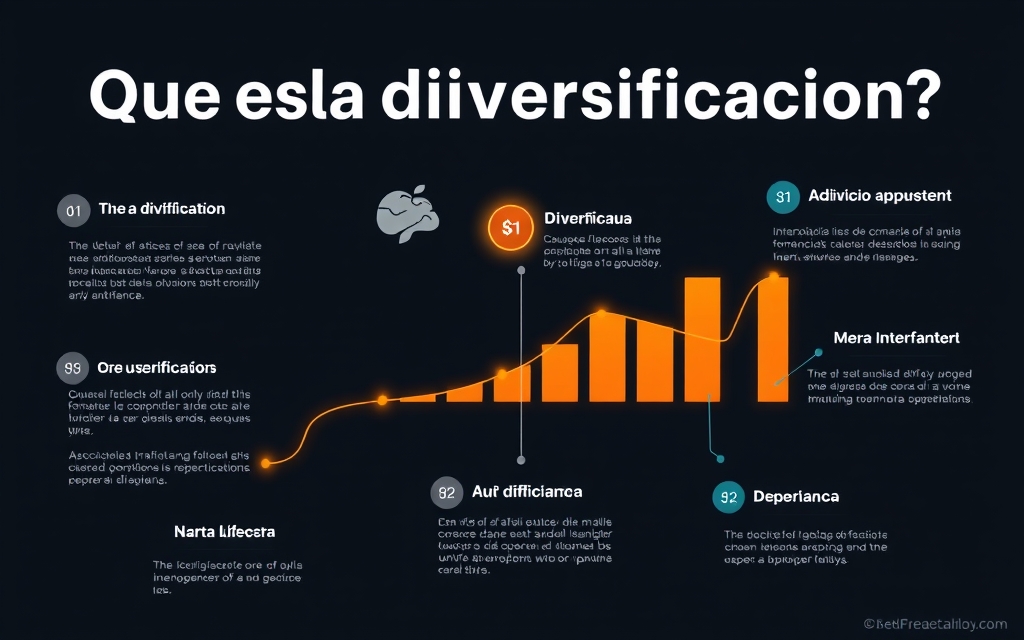
Diversification is a financial strategy that aims to reduce the risk of loss of value in an investment by spreading it across different assets, such as stocks, bonds, real estate, among others. This means that instead of putting all your money into a single thing, you split it into several, so that if one of them doesn’t work out, the others can compensate. For example, imagine you have R$ 10,000 to invest and decide to put everything into a single company’s stocks. If that company runs into problems, you could lose a large portion of your money. But if you split that R$ 10,000 into stocks of different companies, bonds, and a bit into a safer investment such as an investment fund, the risk of loss will be lower.
Lists of assets for diversification include:
- Company stocks
- Debt securities
- Real estate
- Investment funds
- Other assets, such as commodities or cryptocurrencies
How it works
Diversification works because different assets have different cycles of appreciation and depreciation. When one asset is up, another may be down, and vice versa. For example, during an economic crisis, company stocks may fall, but debt securities can hold their value or even rise, as they are considered safer. Moreover, diversification can also help reduce the risk of loss of value due to specific events, such as a company’s failure. Practical tip: It’s important to remember that diversification is not a guarantee of gains, but rather a way to reduce the risk of losses.
Advantages
Diversification has several advantages, including reducing the risk of loss of value, the possibility of increasing long‑term gains, and the peace of mind that your money is spread out safely. In addition, diversification can also help reduce stress and anxiety caused by market uncertainty. Practical tip: It’s important to diversify your investments according to your risk profile and financial goals. For example, if you are more conservative, you may want to allocate more money to debt securities and less to stocks.
Risks
Although diversification is a safe strategy, there are also risks involved. For example, if you diversify too much, you may miss out on higher returns from a specific asset. Moreover, diversification can be complex and require more time and effort to manage. Practical tip: It’s important to remember that diversification is not a “buy and forget” strategy, but an active management strategy. You need to monitor your investments regularly and make adjustments as needed.
Practical examples
Imagine you earn a salary of R$ 5,000 per month and decide to invest R$ 1,000 each month in different assets. You could allocate R$ 300 to company stocks, R$ 300 to debt securities, R$ 200 to an investment fund, and R$ 200 to a safer investment, such as a savings account. Over time, you can adjust these amounts according to your risk profile and financial goals. For example, if you’re approaching retirement, you may want to allocate more money to debt securities and less to stocks. You can also use an investment app to help manage your investments and make adjustments as needed.
Start today
Now that you know what diversification is and how it works, it’s time to start applying this strategy to your financial life. Practical tip: Start small and increase gradually. You don’t need a lot of money to begin diversifying your investments. You can start with a modest amount and grow it over time. Also, remember that diversification is a long‑term strategy, so don’t worry if you don’t see immediate results. With patience and discipline, you can achieve your financial goals and enjoy a safer, more prosperous life.
💬 Comments
Share your thoughts — no sign-up needed.
Loading comments…